

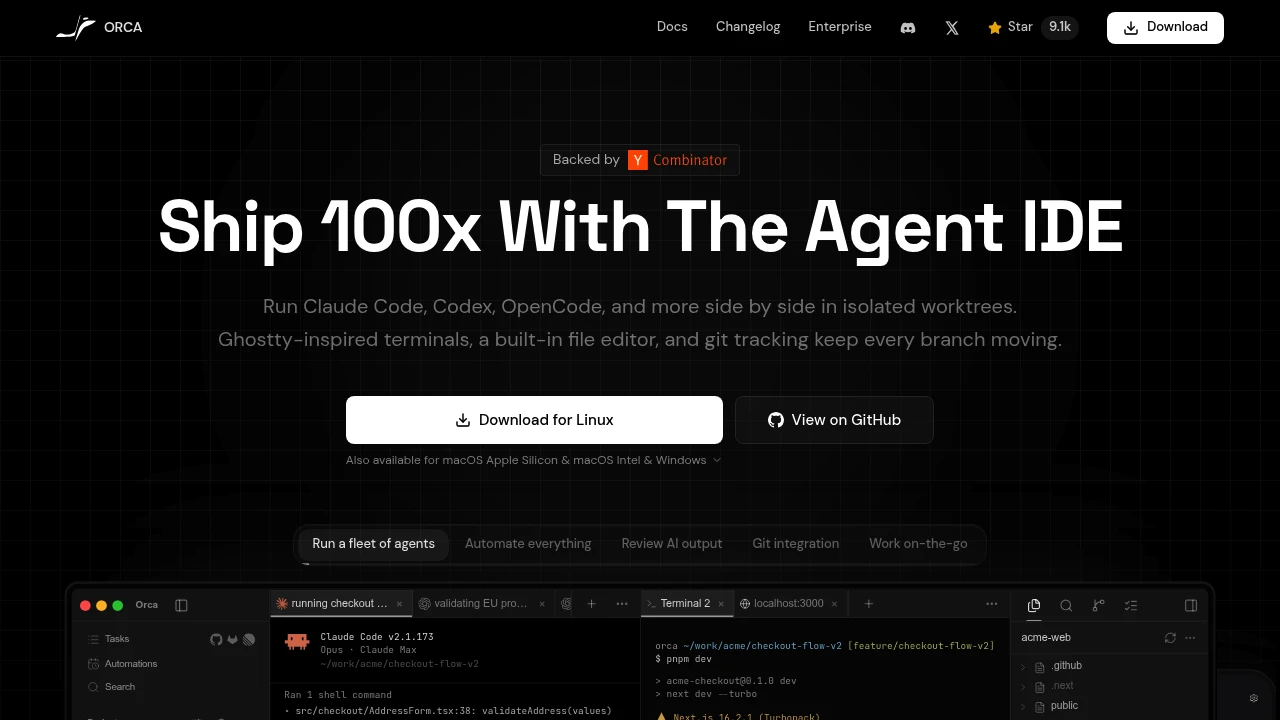
Parallel coding works best when each task has a clear boundary. Overlapping edits and inconsistent assumptions can erase the benefit of adding more agents. Begin with a workflow that makes every change easy to inspect.
Define ownership before work begins
Write a task brief with the behavior, constraints, and expected checks. Separate independent work into branches or worktrees. Decide who integrates changes, and record assumptions that other tasks rely on. Avoid several agents editing the same shared module without coordination.
Review the diff and the result
A completion message is not evidence by itself. Inspect changed files and reproduce the outcome. Check narrow layouts for UI work and repeated requests for backend work. Trial two independent tasks and compare integration effort against a single-agent baseline.
Use parallelism where tasks have boundaries
Good candidates for parallel work include investigating independent failures, preparing documentation, or implementing changes in separate modules. A shared refactor is harder because every participant may depend on the same interfaces. Split the problem around ownership of files and behavior rather than asking several agents to solve the entire issue simultaneously.
A task brief should explain the expected result, the files that may change, and the checks that establish success. Include assumptions about shared types or APIs. Assign one integration owner to reconcile the outputs. A coordination interface can help organize work, but it cannot remove dependencies that are inherent in the code.
Evaluate isolation, review, and cancellation
Compare orchestrators by how they expose each task's workspace, diff, logs, and status. Confirm whether separate runs share uncommitted files or use isolated checkouts. Then test what happens when you cancel a task, restart the application, or receive conflicting changes. These are practical questions to take to projects such as Orca and Paperclip.
Inspect the underlying coding agent as well. OpenCode is an option for direct coding work, while an orchestrator coordinates execution around one or more agents. Keep those roles distinct in your evaluation. A beautiful task board is useful only if you can trace its completion status back to a concrete, reviewable change.
Compare against a single-agent baseline
Run one small feature with a single agent and another similarly sized feature with parallel tasks. Record review time, merge effort, and the number of corrections. Avoid using task completion speed alone as the measure of success. Integration can consume the time saved during generation.
Choose parallel work when the boundaries remain stable and the outputs are easy to combine. Reduce the number of active tasks when shared assumptions change frequently. Keep the final checks tied to the user's behavior: the application should work after integration, not merely have several successful agent summaries.
Before you make the switch
Run a small pilot with your own inputs. Compare the result, setup time, operating effort, and export options. Check current documentation and repository licenses before adopting a project; features and hosted plans can change. Keep the original files and configuration available until your new workflow has been tested.
Official instructions and sources
Official project documentationOriginal AltStack guide by Sushil Kumar Sah. Installation steps follow provider documentation; they do not imply testing on every supported device.